
A FUSAK INITIATIVE. NAIROBI, KENYA
UTU.
MORTUARY SERVICES LTD
"Dignity In Every Detail"
Transforming Kenya's mortuary infrastructure through compassionate, technology-driven and professionally managed services - because every life deserves to be honoured with dignity at its close.
450
COMMUNITY HUBS NETWORK
47
COUNTRIES TO BE SERVED
6
INTEGRATED SERVICE PILLARS
1
STANDARD OF DIGNITY FOR EVERY KENYAN
Redefining What a Public Mortuary Can Be
Utu Mortuary Services Ltd. was established with a single, non-negotiable conviction: that the standard of care a society extends to its deceased — and to the families they leave behind — is a direct reflection of the value it places on every human life. In Kenya's public hospital system, that standard has for too long fallen short of what families deserve and what frontline health workers are equipped to deliver.
We are the implementing vehicle of the Funeral Services Association of Kenya (FUSAK) — established specifically to bring FUSAK's expertise, standards, and advocacy to life inside Kenya's county teaching and referral hospitals. Where FUSAK sets the framework, Utu delivers it: on the ground, in partnership with hospital administrations and county
governments, one institution at a time.
Our name, Utu, is the Swahili word for humanity — for the full expression of personhood,
dignity, and the bonds that connect us to one another. It is not incidental. It is the reason
this company exists. Every system we implement, every protocol we introduce, every
member of staff we train carries that word as its operating principle.
We are beginning with a flagship pilot at Kakamega County Teaching and Referral Hospital - chosen for its regional significance, case volumes, and the commitment of its leadership to raising the bar for patient and family experience. From this foundation, we intend to establish the national standard for integrated public hospital mortuary services across Kenya.
UTU MORTUARY SERVICES LTD. - OUR FOUNDING COMMITMENT
We believe that the care given to the deceased is a reflection of the value a society places on every human life. We take that responsibility seriously — in every detail, at ever institution we serve
OUR SERVICES
Six Pillars.
One Standard.
The Utu Hybrid Integrated Mortuary Model is not a collection of isolated upgrades.
It is a comprehensive, standards-driven framework — six deeply interconnected service pillars that function as a single, cohesive system. Each pillar reinforces the others. Together, they deliver a mortuary that is safe, dignified, forensically capable, digitally transparent, and resilient in any circumstance.
01
Modern Cold Storage & Preservation
We introduce contemporary refrigeration and body preservation systems meeting international biosafety and dignity standards - replacing ageing infrastructure, eliminating capacity bottlenecks, and ensuring that every individual in our care is maintained with the respect their family expects and deserves.
02
Hospital Mortuary Services Integration
Seamless alignment of mortuary operations with the hospital's clinical workflow — including structured handover protocols between wards and mortuary staff, standardised documentation, and a clear, unbroken chain-of-custody from admission to family release. No gaps. No errors. No ambiguity.
03
Forensic capability
A dedicated forensic examination space and trained forensic technician capacity, enabling the hospital to meaningfully support Kenya's judiciary, police, and ODPP. Reduced forensic turnaround times. Fewer delays in criminal investigations and inquest proceedings. A mortuary that serves justice as well as families.
04
DIGITAL BODY TRACKING SYSTEM
A real-time digital registration and tracking platform recording body admission, storage
location, examination status, and release - eliminating administrative error, providing
families with transparent status updates, and generating the data infrastructure needed for
county-level mortality analysis and health planning.
05
DISASTER PREPAREDNESS
Surge-capacity protocols and temporary storage capability ensuring every UTU-managed
mortuary can respond effectively and with dignity to mass casualty incidents. A critical gap
in most county hospital mortuaries — and one that this model directly, permanently closes.
06
STRICT BIOSAFETY PROTOCALS
World Health Organization (WHO) and Kenya Ministry of Health-aligned biosafety standards across all mortuary functions — including PPE provision, infection prevention and control procedures, and staff health monitoring. Because protecting the living is inseparable from honouring the deceased. The safety of our teams, and your teams, is never negotiable.
OUR MODEL
The Hybrid Integrated Mortuary
Model
Kenya's public hospital mortuaries face a convergence of challenges that no single intervention can solve: ageing infrastructure, limited forensic capability, inadequate biosafety standards, manual and error- prone administrative systems, and no framework for surge-capacity
response. The Hybrid Integrated Mortuary Model was designed specifically to address all of these challenges simultaneously - through a single, co-ordinated implementation that leaves no pillar unaddressed.
The model works because it treats the mortuary not as a peripheral afterthought of hospital operations, but as an integrated clinical and community service - one that touches families at their most vulnerable, supports the legal and forensic systems that depend on it, and reflects
directly on the hospital's reputation and its county government's commitment to dignified public services.
Implementation is delivered in structured phases, each building on the last. We begin with infrastructure assessment and cold storage upgrade, move through digital system integration and staff training, and conclude with the establishment of forensic capability and disaster preparedness protocols. At every stage, Utu works alongside your existing mortuary team - not replacing them, but equipping, training, and elevating them.
All training is delivered by FUSAK-accredited trainers and aligned to Kenya Ministry of Health and WHO standards. All systems are documented, auditable, and designed for long-term institutional sustainability - so that the improvements we introduce outlast our direct involvement and become part of the institution's permanent operating standard.
The Hybrid Integrated Mortuary Model is designed to be the new baseline for every county teaching and referral hospital in Kenya. Kakamega is where we prove it.
PILOT INSTITUTIONS
01
Mbagathi County Referral Hospital
Mbagathi County Referral Hospital — a 320-bed Nairobi County referral facility serving a catchment population of over one million people, handling approximately 1,000 outpatient cases daily at a 200% inpatient bed occupancy rate, operating 24-hour mortuary services, and having recently been recognized as the Best Public Hospital in Nairobi County — represents an ideal pilot site for UTU's Hybrid Integrated Mortuary Model. This is precisely because its extraordinary case volumes, urban catchment density, existing mortuary service provision, demonstrated institutional appetite for partnership-driven infrastructure upgrades, and proximity to Kenya's national forensic, judicial, and law enforcement ecosystem in Nairobi collectively create the highest-pressure, highest-visibility operational environment in which the model's six pillars - modern cold storage, clinical integration, forensic capability, digital body tracking, disaster preparedness, and biosafety - can be stress-tested, validated, and showcased to county governments and development finance partners across Kenya as the undeniable national standard.
02
Kakamega County Teaching and Referral Hospital
Kakamega County Teaching and Referral Hospital is a flagship 750-bed ultra-modern facility - the first of its kind commissioned by a county government in Kenya - designed to serve not only Kakamega's residents but a catchment area spanning 13 counties across the Lake Region, incorporating a dedicated funeral home within its planned facilities Prospect and already designated by the Health Cabinet Secretary for elevation to a Level Six Hospital. The hospital serves as the primary public referral facility for Kakamega, Vihiga, Bungoma, and Busia counties - making it the single most strategically significant greenfield healthcare institution in Western Kenya in which UTU's Hybrid Integrated Mortuary Model can b embedded from the ground up, before entrenched legacy practices take hold. With active national government engagement at the level of the Principal Secretary for Medical Services focused on the hospital's completion and operationalization, the current pre-operational window presents a rare and time-sensitive opportunity for UT to shape the mortuary.
03
Siaya County Referral Hospital
Siaya County Referral Hospital is a 360-bed facility serving over one million people as the only hospital in the district, routinely operating beyond capacity in one of the poorest regions of Kenya, which has the highest rates of morbidity and mortality in the country due to infectious diseases including HIV/AIDS and malaria - generating sustained, high-volume mortuary demand. More importantly, the county referral hospital mortuary currently offers only embalming services with a capacity of just 24 bodies, lacking the cold storage, forensic, and biosafety infrastructure that the communities it serves urgently deserve. This acute gap between the scale of need and the current standard of mortuary provision — combined with an active county government commitment to modernizing mortuary services - makes Siaya County Referral Hospital one of the most compelling and impactful pilot sites available to UTU, offering both the institutional appetite for transformation and the human development imperative that gives the Hybrid Integrated Mortuary Model its deepest purpose.
INFRASTRUCTURE
Cold Storage & Preservation Technology
Contemporary refrigeration systems and body preservation protocols meeting international standards — delivered, installed, and commissioned as the physical foundation of the model. Capacity-sized to the hospital's case volumes with a built-in surge buffer.
INTEGRATION
Clinical Workflow Alignment
Standardised handover protocols, chain-of-custody documentation, and inter- departmental communication systems ensuring the mortuary operates as a seamlessly integrated part of the hospital's clinical infrastructure - not a disconnected afterthought.
FORENSICS
Forensic Examination Capability
Dedicated forensic space, trained forensic technicians, and protocols aligned to Kenya's judicial and law enforcement requirements — reducing turnaround times, supporting ODPP processes, and enabling the hospital to meaningfully serve the justice system.
DIGITAL
Body Tracking & Data Platform
Real-time digital registration, storage tracking, and release management — eliminatin error, providing families with transparent status updates, and generating county-level mortality data that supports public health planning at the highest level.
RESILIENCE
Disaster Preparedness
Mass casualty surge protocols, temporary storage capacity frameworks, and inter-agency coordination procedures - ensuring that when the worst happens, the mortuary responds with the speed, capacity, and dignity that families and communities deserve.
SAFETY
Biosafety & Staff Protection
WHO and MoH-aligned biosafety standards across every mortuary function — from PPE provisioning and IPC procedures to staff health monitoring. Because a safe mortuary team is the non-negotiable foundation of every other service we deliver.
Backed by the Funeral Services Association of Kenya
Utu Mortuary Services Ltd. is the implementing vehicle of FUSAK — Kenya's national body for the funeral services profession. Every standard we deploy, every protocol we introduce, and every training programme we deliver is grounded in FUSAK's accumulated expertise, institutional relationships, and commitment to raising the bar for how Kenya honours its dead.
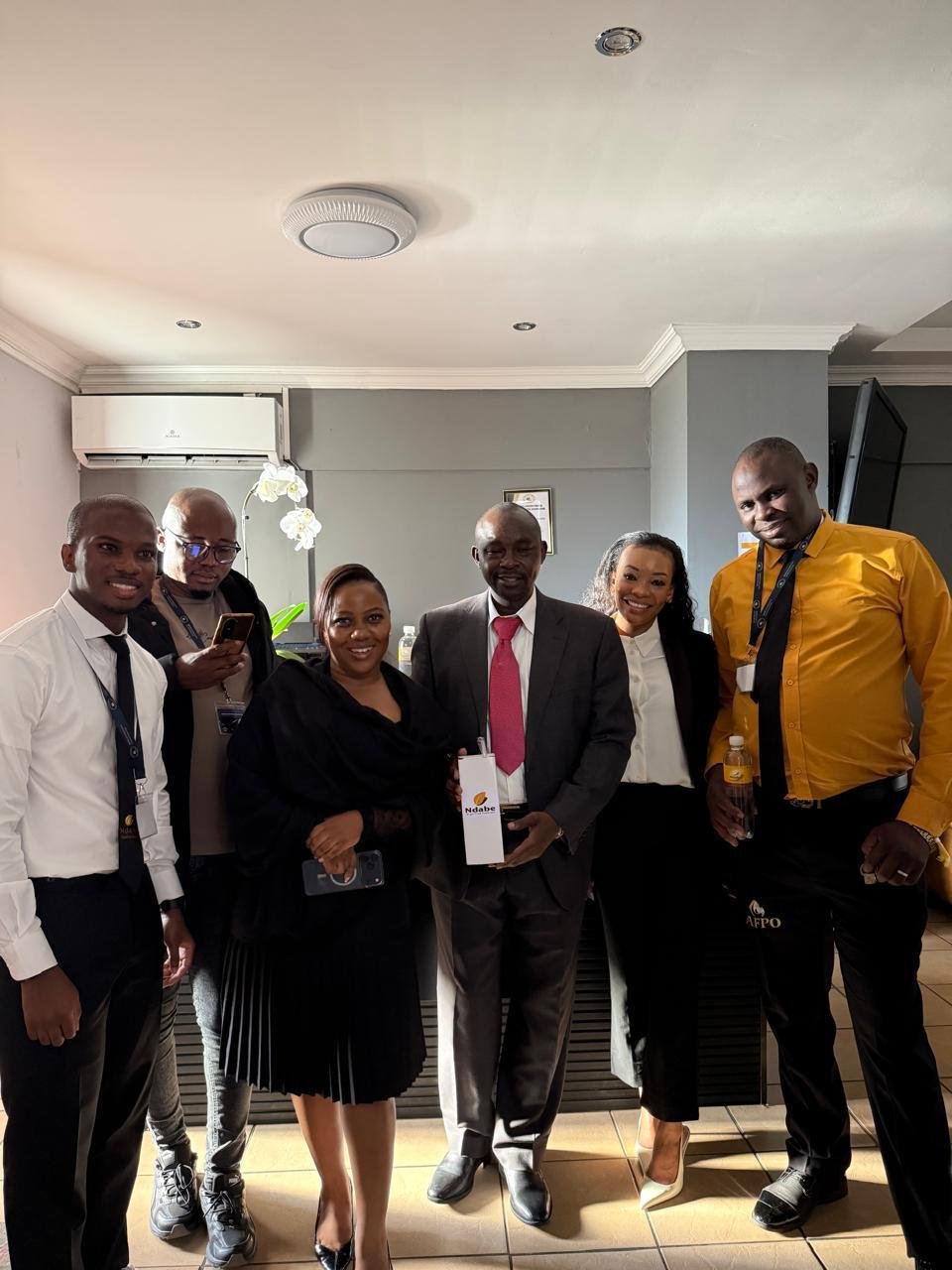
UTU's Chairman at The South African Funeral Practitioners (SAFPA) International Convention (2026)
A premier global gathering where funeral industry professionals unite — practitioners, suppliers, regulators, government leaders, and international partners — to share insights, shape policy, and forge lasting partnerships.
CONTACT & PARTNERSHIP
Let's Build This Together
Whether you are a hospital administrator seeking to elevate your mortuary standard, a county government looking to fulfill your commitment to dignified public services, a development finance partner who recognizes the transformative potential of this model, or a family seeking information about our services — we want to hear from you.
HOSPITAL & COUNTY PARTNERSHIPS
For medical superintendents, hospital CEOs, county health directors, and government officials seeking to implement the Hybrid Integrated Mortuary Model at their institution.
INVESTMENT & DEVELOPMENT FINANCE
For development finance institutions, impact investors, and private sector partners interested in supporting the national rollout of the Utu model across Kenya's county referral hospital network.
FAMILY SERVICES
For families seeking information about mortuary services, body release procedures, or family support resources at hospitals where Utu operates.